kodymedical@gmail.com
 +91-9380223396
 My Account
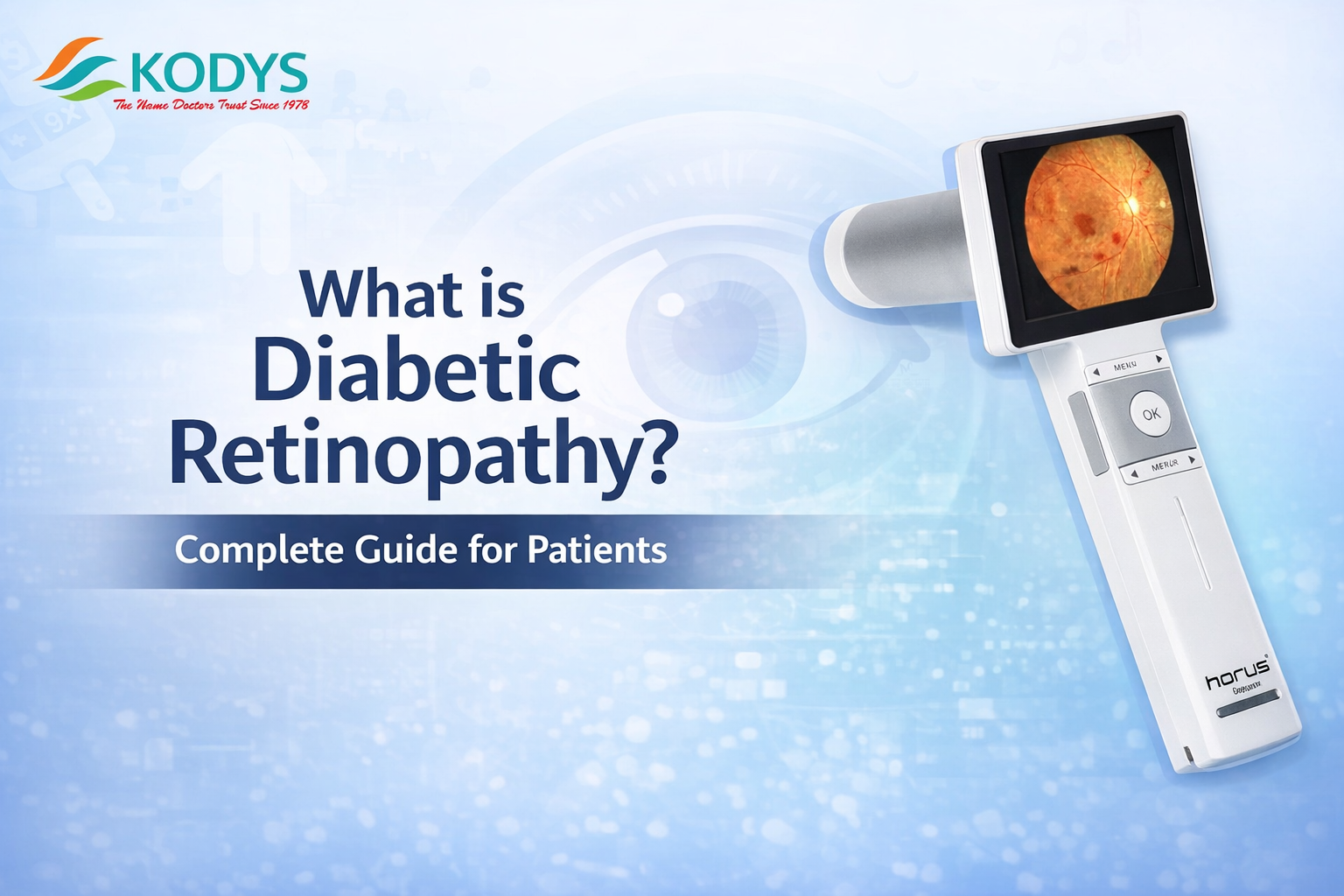
Diabetic retinopathy is a serious eye condition that affects people living with diabetes. It develops when high blood sugar levels damage the tiny blood vessels in the retina—the light-sensitive tissue at the back of your eye that enables vision. Over time, this damage can lead to blurred vision, vision loss, or even permanent blindness if not detected and treated early.
Understanding diabetic retinopathy, recognizing its symptoms, and knowing the importance of early screening can help protect your vision and ensure timely treatment.
What Causes Diabetic Retinopathy?
When blood glucose (sugar) levels remain high over a prolonged period, it can weaken and damage the blood vessels in the retina. These weakened vessels may leak fluid or bleed, creating swelling and clouding your vision. In more advanced cases, the retina grows new abnormal blood vessels that can also leak or cause scar tissue, further impairing vision.
The risk of developing diabetic retinopathy increases with:
- Poor control of blood sugar
- Longer duration of diabetes
- High Blood Pressure
- High Cholesterol
- Smoking
- Pregnancy in Diabetic women
Because early stages often show no symptoms, regular eye examinations are crucial for anyone with diabetes.
Symptoms of Diabetic Retinopathy
In its initial phases, diabetic retinopathy might not cause noticeable symptoms. As the condition progresses, you may notice:
- Blurred or fluctuating vision
- Spots or “floaters,” in your visual field
- Difficulty seeing at night
- Difficulty seeing at night
- Colors fading or looking washed out
- Sudden vision loss in severe cases
Since symptoms often arise only after damage has occurred, consistent eye screenings are essential even when your vision feels normal.
Stages of Diabetic Retinopathy
Diabetic retinopathy progresses through multiple stages:
- Mild Non-Proliferative
Tiny bulges (microaneurysms) form in the retina’s blood vessels.
- Moderate Non-Proliferative
Some blood vessels that nourish the retina begin to close off.
- Severe Non-Proliferative
Many more vessels become blocked, signaling the retina to grow new vessels.
- Proliferative Diabetic Retinopathy
Abnormal new vessels grow, which are fragile and prone to leakage—leading to severe vision impairment.
Early detection of these stages is essential to prevent irreversible damage.
How Is Diabetic Retinopathy Diagnosed?
Diagnosis begins with a comprehensive eye exam, including dilated pupil evaluation by an eye care professional. One of the most effective tools for detecting diabetic retinopathy is fundus imaging—photographing the retina to check for signs of damage.
Modern retinal devices like the Horus DEC200 Handheld Digital Eye Fundus Camera have transformed diabetic eye screening with high-quality imaging, portability, and ease of use.
Why the Horus DEC2020 Matters
The Horus DEC200 is a handheld digital eye fundus camera designed for capturing detailed retinal images with excellent clarity and convenience. Its features include:
- True 5MP high-resolution imaging captures clear views of the retina, crucial for identifying early signs of diabetic retinopathy.
- 45° field of view (FOV) for a broad and detailed retinal scan.
- Auto-focus and power-focus functions for sharp image capture.
- Touchscreen LCD and Wi-Fi connectivity for easy operation and immediate image sharing.
- Portable and lightweight design, making it ideal for clinics, hospitals, mobile screenings, and telemedicine use.
This handheld device simplifies documenting retinal changes, allowing doctors and screening teams to detect or monitor diabetic retinopathy effectively and efficiently.
Treatment Options for Diabetic Retinopathy
Treatment varies based on the severity of diabetic retinopathy:
- Early stages may only require monitoring and improved blood sugar control.
- Laser therapy can seal leaking blood vessels or stop abnormal vessel growth.
- Anti-VEGF injections help reduce swelling and block vessel growth.
- Vitrectomy surgery may be needed for significant bleeding into the vitreous or retinal detachment.
Can Diabetic Retinopathy Be Prevented?
While diabetic retinopathy cannot always be completely prevented, you can significantly lower your risk with:
- Maintaining stable blood sugar levels
- Controlling blood pressure and cholesterol
- Eating a balanced diet
- Regular exercise
- Avoiding smoking
- Undergoing regular eye examinations
Annual or even biannual screenings are vital for early detection and timely care.
The Role of Fundus Imaging in Diabetic Retinopathy
Fundus photography—the process of capturing images of the retina—plays a crucial role in diagnosing and monitoring diabetic retinopathy. High-resolution retinal images help clinicians:
- Detect early retinal abnormalities such as microaneurysms and hemorrhages
- Monitor disease progression over time
- Document retinal changes objectively
- Plan appropriate treatment strategies
Modern devices like Horus DEC200 bring these capabilities to clinics of all sizes, aiding eye care professionals in making accurate diagnoses and improving patient outcomes.
Conclusion
Diabetic retinopathy is a condition that can quietly progress and cause serious vision problems if undetected. Regular eye screenings, early detection, and timely treatment are critical for preserving vision for people living with diabetes. With innovations like the Horus DEC200 fundus camera, healthcare providers can diagnose and monitor this condition more efficiently and at earlier stages—giving patients the best chance at maintaining healthy vision.
Frequently Asked Questions (FAQ) – Diabetic Retinopathy
1. What is Diabetic Retinopathy?
Diabetic retinopathy is a diabetes-related eye disease caused by damage to the blood vessels of the retina due to prolonged high blood sugar levels. If left untreated, it can lead to vision loss or blindness.
2. Who is at risk of developing diabetic retinopathy?
Anyone with type 1 or type 2 diabetes is at risk. The risk increases with poor blood sugar control, long duration of diabetes, high blood pressure, high cholesterol, smoking, and pregnancy in diabetic patients.
3. What are the early signs of diabetic retinopathy?
Early-stage diabetic retinopathy often shows no symptoms. As it progresses, symptoms may include blurred vision, floaters, difficulty seeing at night, faded colors, and sudden vision changes. Regular eye screening is essential for early detection.
4. How is diabetic retinopathy detected?
Diabetic retinopathy is detected through a comprehensive eye examination, including fundus photography and retinal imaging. Advanced devices like the Horus DEC200 handheld fundus camera help capture high-resolution retinal images for early and accurate diagnosis.
5. What is the Horus DEC200, and how does it help in diabetic retinopathy screening?
The Horus DEC200 by Kody Medical is a portable digital eye fundus camera used for capturing detailed retinal images. It enables quick, non-invasive screening for diabetic retinopathy, making it ideal for clinics, hospitals, and mobile screening programs.
6. Can diabetic retinopathy be treated?
Yes. Treatment options depend on the severity and may include blood sugar control, laser treatment, anti-VEGF injections, or surgery in advanced cases. Early detection through regular screenings significantly improves treatment outcomes.
7. Can diabetic retinopathy be prevented?
While it cannot always be completely prevented, the risk of diabetic retinopathy can be reduced by maintaining healthy blood sugar levels, controlling blood pressure and cholesterol, avoiding smoking, and undergoing regular diabetic eye checkups.
8. How often should diabetics get their eyes checked?
People with diabetes should undergo a comprehensive eye exam at least once a year. More frequent screenings may be required if diabetic retinopathy is already detected.