kodymedical@gmail.com
 +91-9380223396
 My Account
Diabetic Retinopathy Supplier in India
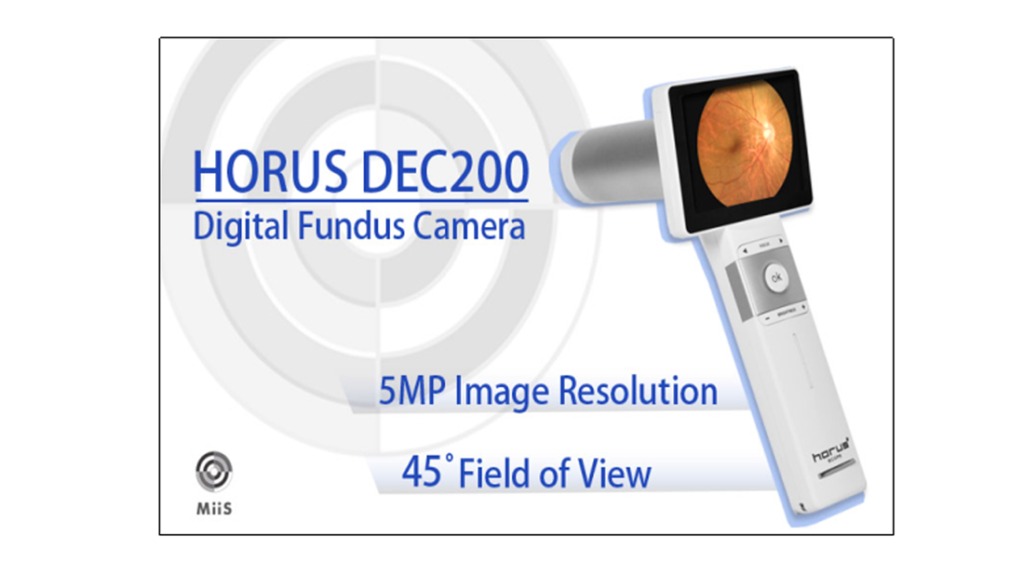
HANDHELD DIGITAL EYE FUNDUS CAMERA- HORUS DEC200
Horus DEC200, the Digital Handheld Fundus Camera from Medimaging Integrated Solution, Inc. (MiiS), is currently the only portable fundus camera that delivers 45 degree FOV and true 5MP (2592*1944 pixels) of fundus images for health care professionals at all locations including hospitals, clinics, health screening centers and mobile medical stations.
Features:
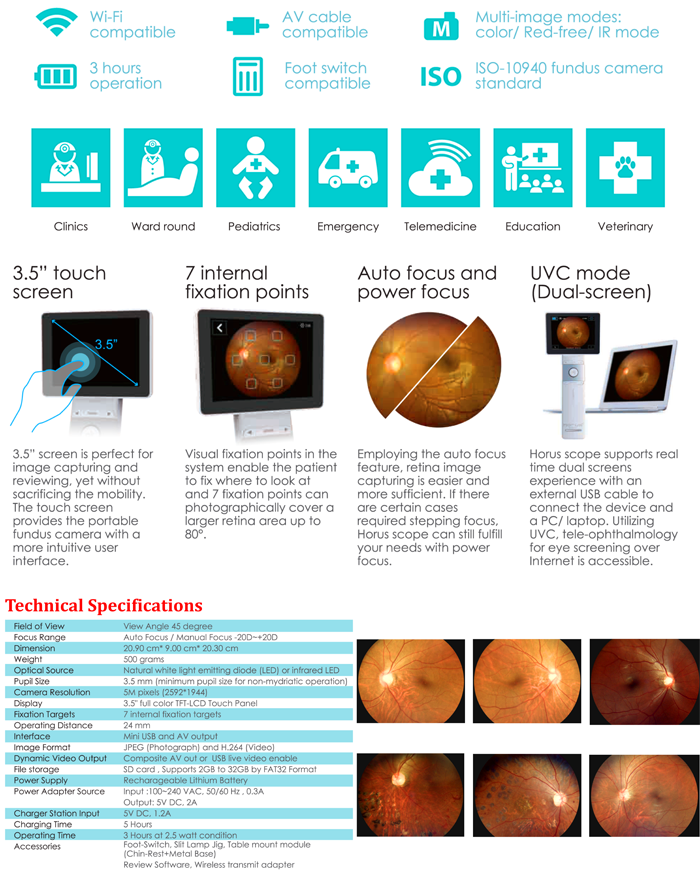
- Horus DEC200 Non-Mydriatic Digital Handheld Fundus Camera offers high image quality with ISO 10940 fulfilment.
- 5MP (2592*1944 pixels) and 45 degree FOV of fundus image are captured to provide more details.
- 7 internal fixation targets for macula center, disk center and peripheral image in DEC 200 optical modules.
- Horus DEC200 provides both auto-focus and power-focus function to facilitate image capturing.
- Touch LCD Screen and Wi-Fi compatibility are also equipped.
- With a special slit lamp jig, Hours DEC 200 can be mounted with slit lamp for desktop application.
- The light and compact design of Horus DEC200 makes screening and documentation of retinal conditions like AMD, Glaucoma and Diabetic Retinopathy easier than ever before. Cost-effective fundus image capture, and is ideal for early diagnosis, telemedicine, mobile care and outreach activities.
Frequently Asked Questions
1. What is diabetic retinopathy, and how does it affect vision?
Diabetic retinopathy is an eye disease that occurs when long-standing high blood sugar damages the tiny blood vessels in the retina at the back of the eye. In its early stages it may not cause any noticeable symptoms, but as it progresses it can lead to blurred vision, dark spots, floaters and even permanent vision loss if left untreated. Because the damage is often silent in the beginning, regular retinal screening is essential for people living with diabetes.
2. What are the early signs and symptoms of diabetic retinopathy that patients should not ignore?
Many people with early diabetic retinopathy have no symptoms at all, which is why routine eye examinations are so important. As the condition worsens, patients may notice blurred vision, difficulty reading, dark or empty areas in their field of view, colors appearing faded, and an increase in floaters. Sudden vision changes, such as a curtain-like shadow or a dramatic drop in vision, can indicate advanced disease or retinal bleeding and should be treated as an emergency.
3. Who is at highest risk of developing diabetic retinopathy and when should screening begin?
Any person with type 1 or type 2 diabetes is at risk of developing diabetic retinopathy, especially if blood sugar, blood pressure, and cholesterol are not well controlled over many years. The risk increases with longer duration of diabetes, pregnancy in women with diabetes, smoking, and existing kidney disease. Most guidelines recommend that people with type 2 diabetes have a comprehensive dilated eye exam at diagnosis and then at least once a year, while those with type 1 diabetes should start annual screening within a few years of diagnosis or as advised by their eye specialist.
4. How is diabetic retinopathy diagnosed using fundus cameras and retinal imaging?
Diabetic retinopathy is usually diagnosed during a dilated eye examination in which the ophthalmologist or trained screener uses special lenses and a fundus camera to take detailed photographs of the retina. Handheld digital eye fundus cameras such as the Horus DEC200 can capture high-resolution retinal images through pupils as small as 3.5 mm, using natural white or infrared LED illumination. These images allow clinicians to detect microaneurysms, hemorrhages, exudates, and neovascularization and can be stored as JPEGs or videos for documentation, telemedicine screening, and AI-assisted grading.
5. What is the Horus DEC200 handheld digital eye fundus camera used for in diabetic retinopathy screening?
The Horus DEC200 handheld digital eye fundus camera is designed to capture high-quality color images of the retina to assist in the screening and documentation of diabetic retinopathy and other retinal diseases. It offers a 45-degree field of view, 5-megapixel camera resolution, a 3.5-inch color touch screen, and both natural white and infrared LED light sources for comfortable imaging. Its compact size, light weight, and USB/AV interfaces make it suitable for use in hospitals, eye clinics, and outreach screening camps where portability and quick image capture are important.
6. How often should a person with diabetes undergo diabetic retinopathy screening with fundus imaging?
Most people with diabetes should undergo a comprehensive eye examination, including retinal imaging, at least once a year, even if they do not have any visual complaints. Those with existing diabetic retinopathy, rapid changes in blood sugar control, pregnancy, or other risk factors may need more frequent screening as recommended by their ophthalmologist. Regular screening with fundus cameras helps detect changes early, allowing timely treatment and significantly reducing the risk of severe vision loss.
7. Can diabetic retinopathy be prevented or its progression slowed with good diabetes control?
Good control of blood sugar, blood pressure, and cholesterol is one of the most effective ways to reduce the risk of developing diabetic retinopathy and to slow its progression once it is present. Maintaining a healthy diet, exercising regularly, taking prescribed medications as directed and avoiding smoking all support better vascular health in the retina. Even with good control, some people will still develop diabetic retinopathy over time, which is why regular eye exams and fundus imaging remain essential.
8. What treatment options are available if diabetic retinopathy is detected on fundus camera screening?
If diabetic retinopathy is detected, treatment options may include careful observation for early disease, laser photocoagulation, intravitreal injections of anti-VEGF drugs or steroids, and sometimes vitrectomy surgery for advanced cases. The choice of treatment depends on the stage of retinopathy, presence of macular edema, and overall eye health and is decided by a retinal specialist. Early detection through regular retinal imaging greatly increases the chance that treatment will preserve useful vision.
9. How do handheld fundus cameras and AI tools improve access to diabetic retinopathy screening?
Handheld fundus cameras like the Horus DEC200 make it possible to capture retinal images in primary care clinics, diabetology centers, and outreach camps, without needing a fully equipped eye hospital. These images can be securely shared with eye specialists or processed by approved AI algorithms to detect signs of diabetic retinopathy and flag patients who need urgent referral. This combination of portable imaging and AI support helps expand screening coverage, especially in areas with limited access to ophthalmologists.
10. What is the price of the Horus DEC200 handheld digital eye fundus camera for diabetic retinopathy screening in India?
According to Kody Medical Electronics, the Horus DEC200 handheld digital eye fundus camera for diabetic retinopathy screening is listed at approximately ₹4,85,000 per piece in India. The exact price you pay can vary based on current offers, included accessories, warranty terms and institutional or bulk purchase discounts. For the most accurate and up-to-date pricing, it is recommended to contact Kody Medical Electronics directly through their website or sales team and request a customized quotation for your hospital or clinic.